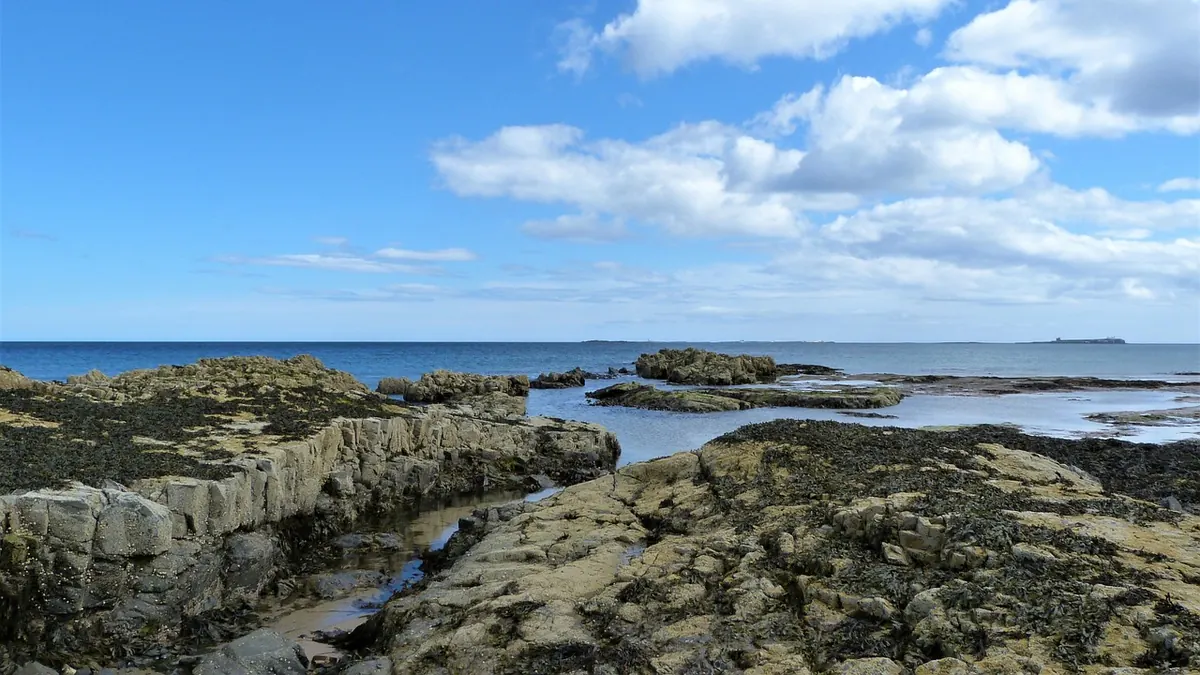
There is a particular quiet that arrives on a rocky shore at low tide. The water stops slapping at the rocks, the weed begins to drip, and the pools are left holding whatever the sea has not bothered to take back. For a beginner, that is the moment everything gets interesting — and the moment you have the least time to enjoy it. Rockpooling is simple, cheap and absorbing, but it rewards people who plan around the tide and handle what they find with care.
The tide sets the timetable for everything else: which pools you can reach, how long you have, and what you are likely to see.
Tide tables are published for local ports and harbours, and every area has a reliable printed or online version. The height of low water matters as much as the time. A deep low opens up the lower shore and pools that stay submerged on ordinary days. Spring tides — the ones around a new or full moon, roughly fortnightly — pull the water further back than neap tides, so plan your best trips around them.
Arrive about an hour before low water. That gives you time to walk out, look properly, and start heading back uphill before the water turns. The incoming tide is the part beginners underestimate. A channel you crossed at ankle depth can become an awkward crossing surprisingly quickly, and it often fills from behind you rather than in front.
Wind and swell change the picture too. A strong onshore wind or a heavy swell can push water onto rocks the tide table suggests are dry. Watch the sea for a few minutes before committing to a low ledge. If the shore is rough, pick somewhere sheltered with an easy exit, or come back another day — there is always another low tide.
You do not need much, and a heavy bag is a nuisance on uneven ground. This is what is worth carrying:
Leave glass at home, and keep your hands as free as you can. A bag that swings about is a nuisance when you are steadying yourself on wet rock.
Where you are on the shore matters as much as how you look.
Covered only by the highest tides, so its residents are hardy: periwinkles, barnacles, limpets and wiry channelled wrack. Pools here are shallow and often warm, refilled by rain as much as by sea water.
The best place to start. Bladderwrack and other seaweeds grow thickly, and among them you will find sea anemones, shore crabs, mussels, dog whelks and small fish.
Exposed only on the lowest tides, and home to more delicate life: sponges, sea squirts, starfish, sea urchins, kelp. These creatures are not built to sit out of water for long, so work quickly and gently here — and leave the pools alone if the tide has already turned.
Whichever zone you are in, slow down. Let the silt settle, then look at the edges, under overhangs and around the base of weed. Turn a stone by rolling it towards you, never by levering it up and walking away, and put it back exactly as it was. The underside of a stone is a habitat, and anything left on top is exposed to sun, wind and gulls.
A few habits make the difference between watching wildlife and damaging it.
Some marine species are protected, and collecting from the shore is restricted in places. Check local byelaws before removing anything, and ask the harbour authority or a local wildlife group if you are unsure.
Photo: WinnieC / Pixabay