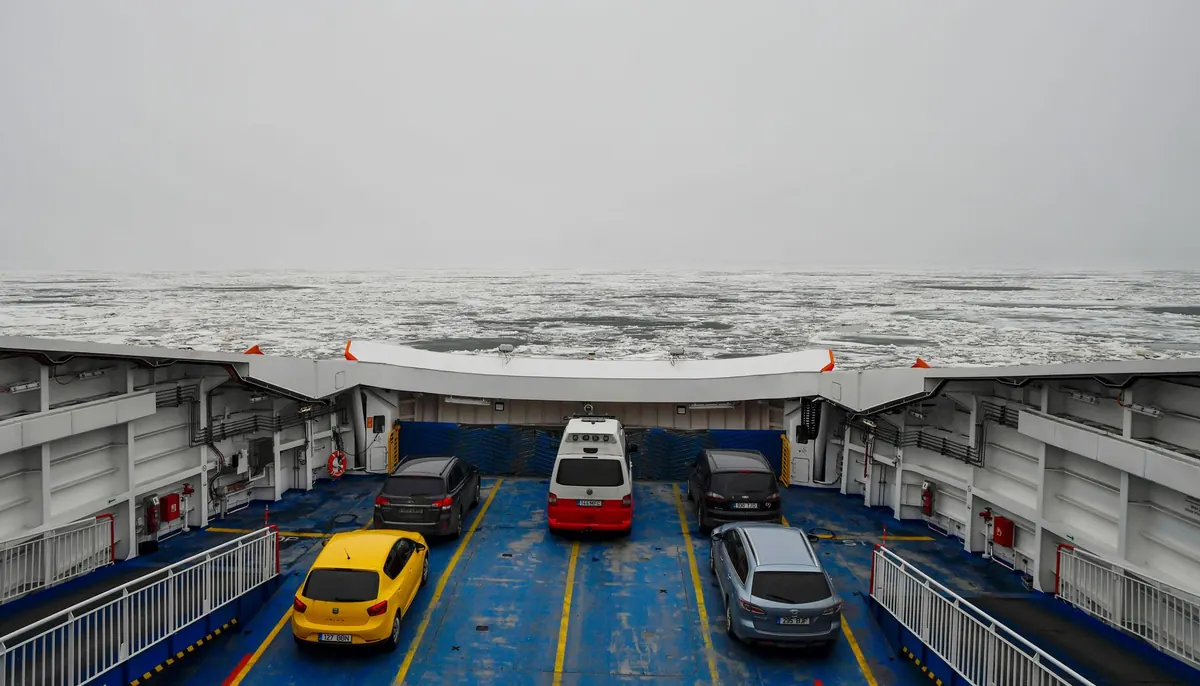
Getting to the Isle of Man is rarely a single decision. It is a small chain of them: which port or airport you leave from, whether the car comes with you, what time of year you travel, and how much you value your own time. The island sits in the Irish Sea roughly between England, Scotland, Ireland and Wales, so there is usually more than one sensible way in. What follows is a fair comparison of the two main options — sea and air — without pretending one wins every time.
Ferries into Douglas are run mainly by the Isle of Man Steam Packet Company, with sailings from Heysham and Liverpool, plus seasonal services from Belfast and Dublin. Crossing times vary by route and vessel. The fast craft from Liverpool is usually the quickest, at around three hours, while Heysham sailings tend to run closer to four. Some routes offer overnight departures, which can be a clever way to use a night rather than lose a day.
On the air side, Ronaldsway Airport sits near Castletown in the south of the island, a short drive or bus ride from Douglas. Airlines serving the island change their schedules with the seasons, so check who is currently flying from your nearest airport rather than relying on what you remember from a couple of years ago. Flight times are short — often under an hour from the north-west of England.
A ferry ticket and a plane ticket are not priced in the same way, which makes direct comparison fiddly. Airline fares rise steeply as departure approaches and the cheap seats sell out. Add a checked bag, a chosen seat and a coffee, and the headline price stops meaning much. Ferry fares are steadier but scale with what you bring: a car, a van, a caravan or a motorbike all change the equation, and passengers are charged on top of the vehicle.
A rough rule of thumb: travelling alone or as a couple, on foot, and booking early, a flight is often the cheaper and faster option. Travelling as four with a car, roof bars and a fortnight's luggage, the ferry frequently works out better than four flights plus car hire on the island. Foot passenger fares on the ferry are worth checking too — outside peak weeks they can be surprisingly competitive.
Peak periods matter enormously. TT fortnight and the Manx Grand Prix fill the island, and both ferries and flights become expensive and scarce months ahead. If your dates are fixed to an event, book as early as you possibly can. Fares and timetables change, so confirm current details with the operator before you commit.
The flight is almost always faster in the air. It is the edges that eat the advantage. Add the drive to the airport, parking or a taxi, check-in, security, boarding, the flight itself, baggage reclaim, then the transfer from Ronaldsway into Douglas, and a forty-minute hop becomes a three or four-hour journey.
The ferry is slower at sea but simpler on land. You arrive at the terminal perhaps an hour before departure with a car, or less on foot, drive or walk straight on, and do the same at the other end. The sea terminal in Douglas is close to the town centre, so foot passengers can be at their hotel within minutes of docking.
If you live within an hour or so of Liverpool or Heysham, the ferry can genuinely match a flight door to door. From London or the south coast, the plane usually wins on time, even allowing for the airport palaver.
The Irish Sea is not always kind. Fast craft are more sensitive to swell and wind than the larger conventional ferries, so rough weather can mean a switched vessel, a delayed sailing or a cancellation. Winter storms cause more disruption than summer ones, but a breezy spring day can still change plans.
Flights are not immune either. Fog, high winds and island weather can ground aircraft, and Ronaldsway has its share of misty mornings. The difference is what happens next. Airlines can often rebook you onto a later flight the same day; ferry operators may have only one or two sailings a day, so a cancellation can push you to the following day.
Leave a buffer at both ends if you have something time-critical to attend. Think twice about booking a sailing or flight that lands the same morning as a wedding, an interview or an appointment you cannot miss.
This is where the ferry quietly wins for many people.
Check the current route map first, because both ferry and flight schedules shift with the seasons. Then price the whole journey, not just the ticket: airport parking, petrol, car hire, luggage and transfers can flip the answer entirely.
Book early for event weeks, half-terms and summer weekends. If you are flexible, midweek sailings and off-peak flights are noticeably better value. And if the trip matters, build in a cushion and consider travel insurance that covers delay and cancellation — read the small print on weather disruption before you rely on it.
Finally, remember that these are two different kinds of journey. One is a short, efficient hop. The other is a slow, scenic arrival with a decent cooked breakfast and a view of the coastline. Plenty of islanders have a firm favourite, and after a few trips each way, you will too.
Photo: Osman Karagöz / Pexels